AI model configuration
Simon relies on a language model to reason, read your documents and drive the accounting tools. So before working with the agent, you need two things: a provider connected (OpenAI, Anthropic, Google, OpenRouter or a compatible service) and a model capable of holding tool-driven reasoning and processing attachments — particularly PDFs and images.
The application filters out by itself the models that don’t have these minimal capabilities. If a model doesn’t appear in the selector, it’s usually because it isn’t connected, isn’t exposed by your provider, or can’t read the required documents.
Connecting a provider
- Open the provider connection screen, from the settings or the dedicated command.
- Choose a provider from the list.
- Follow the proposed authentication method — API key, OAuth or code depending on the case.
- Once the provider is connected, open the model selector.
- Select the model the agent should use.
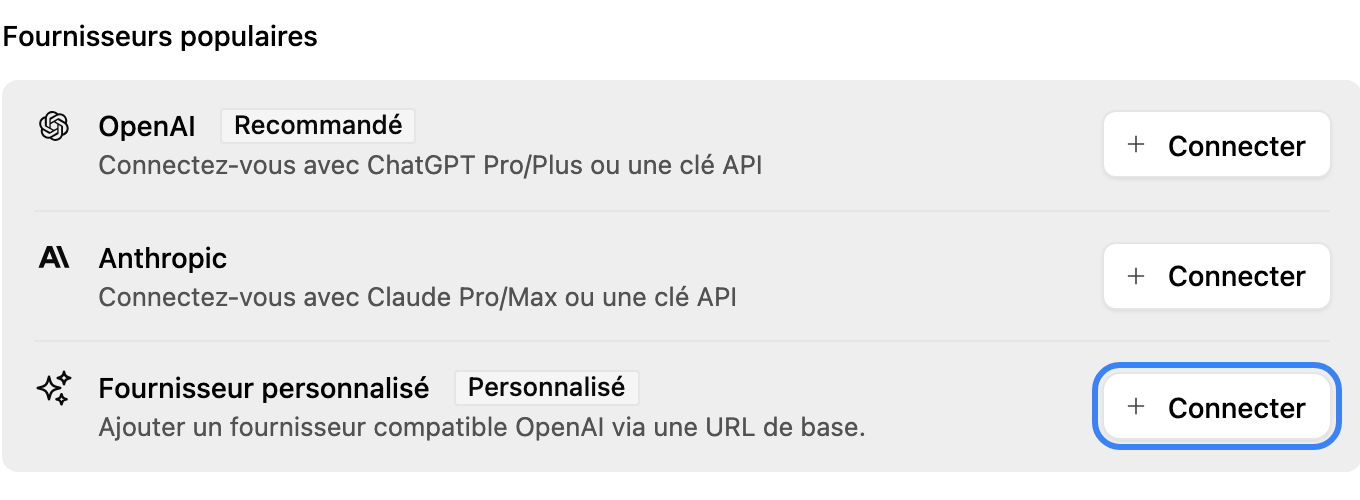
The recommended provider appears in a separate group; the others remain available if you prefer your own key, an existing subscription or a multi-model router.
Adding a custom provider
If your provider isn’t listed, go through the custom provider option. It is mainly useful for OpenAI-compatible services, internal routers or local servers — and assumes that you know the exact capabilities of the declared model, since Simon won’t be able to guess them for you.
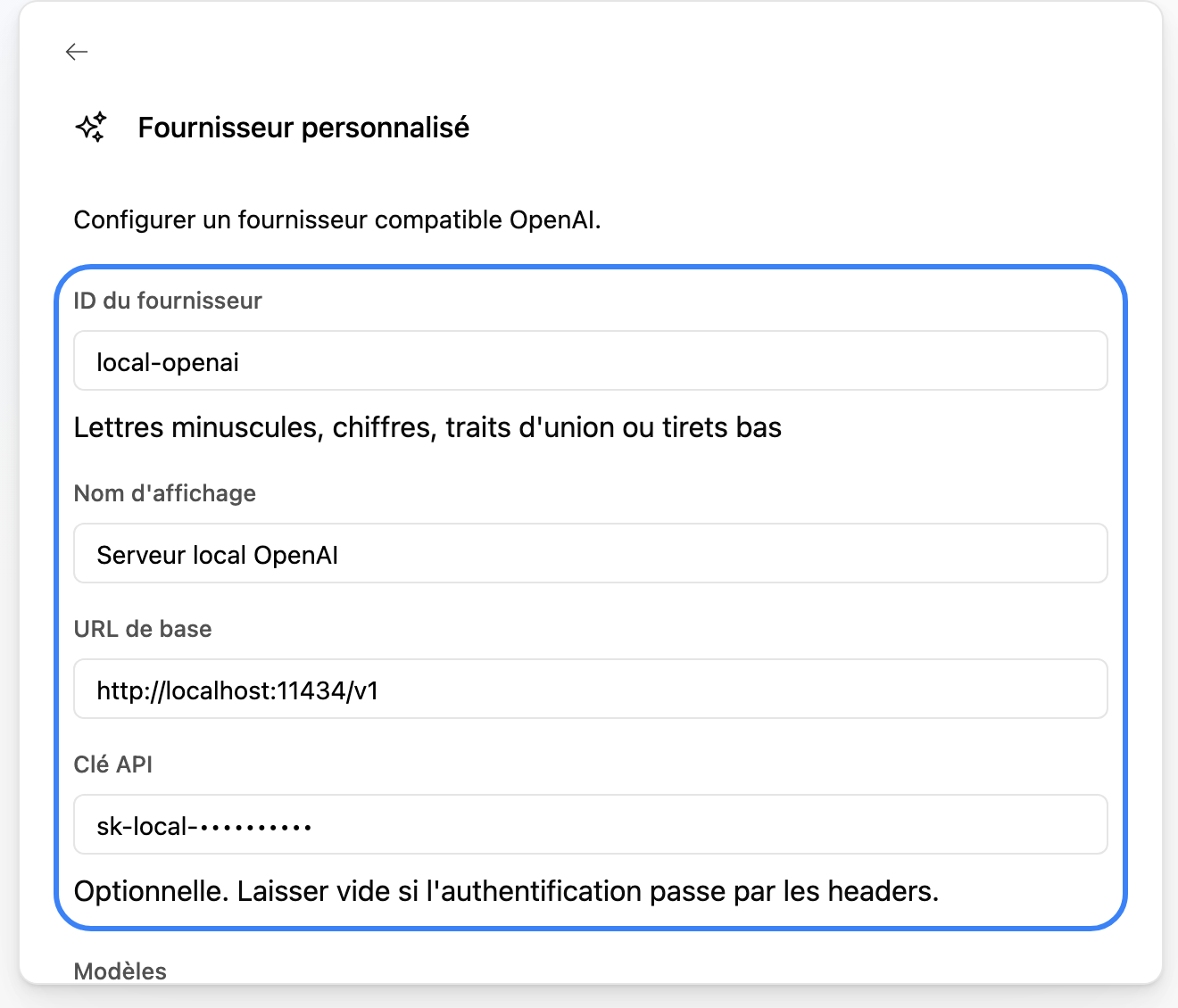
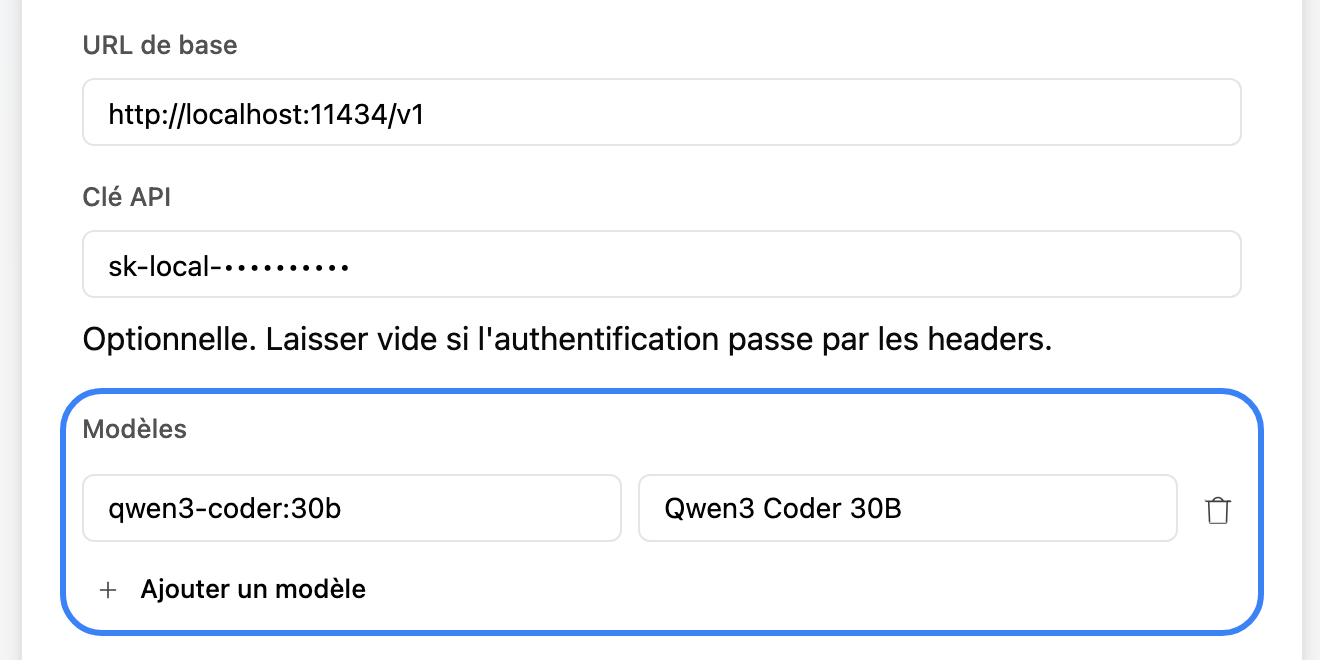
You will need to provide a provider identifier, a displayed name, a compatible API URL, an API key if the service requires one, and at least one available model.
Choosing your model well
For Simon, price is not the only criterion — nor even the most important. The model must know how to follow a multi-step plan, call the tools with precise arguments, read an invoice or a statement in PDF, explain a block instead of working around it, and hold the accounting context of an entire session.
A small local model is enough to discover the interface, but it more easily produces reasoning errors or drives the tools poorly. For real accounting, favor a model that is solid on long, structured tasks.
Cost and privacy
Each exchange with the agent consumes tokens at your provider, and the bill varies a lot depending on the model, the volume of documents and the size of the context. A short question costs little; processing a batch or a year-end closing consumes noticeably more; attachments weigh heavily. Also bear in mind that a cheap model can end up costing more in the end if it multiplies the corrections.
On the privacy side, the principle remains that of the application: your accounting data stays stored locally. When the agent calls on an external provider, only the context needed for the request is transmitted to it. So check the data retention and usage conditions of the provider you choose.